Achieving ISO 27001:2024 compliance is challenging for large enterprises due to the scale, complexity, and continuous monitoring required. Forward Networks’ Digital Twin technology provides a robust solution by creating an accurate model of the network, enabling assessment based on the current network state and configuration, performing reachability checks, and validating configuration; all of which are essential for compliance. The platform simplifies complex tasks like risk assessment, inventory validation, and evidence collection, saving time and resources. For organizations aiming for ISO 27001:2022 certification or upgrades, Forward Enterprise streamlines compliance, strengthens security, and eases audit processes, enhancing overall information security management.
Implementing an Information Security Management System (ISMS) as required by ISO 27001, defining its boundaries, and documenting security controls across all departments and locations can be challenging, especially in geographically dispersed organizations. In a recent whitepaper, we provided an overview of ISO 27001 controls, focusing specifically on the framework updates introduced in the 2022 version. Starting May 1 of this year, all new ISO certifications—or renewals—must align with the updated controls in ISO 27001:2022. These time-sensitive changes in controls and reporting structures present significant challenges for complex, distributed organizations, requiring updates to processes and the adoption of tools to enhance visibility. Forward Enterprise’s digital twin platform simplifies this transition for enterprises upgrading from the 2013 version and supports those pursuing certification for the first time.
The framework classifies controls into three categories: Preventative, Detective, and Corrective. In this solution brief, we will explain how Forward Enterprise’s features can help implement specific ISO controls. This includes managing network equipment configurations and addressing the 13 controls related to asset reachability and segregation.
Despite the challenges, achieving ISO 27001 compliance unlocks new business opportunities in regulated industries, strengthens an organization’s security posture, and demonstrates a commitment to information security. Forward Enterprise streamlines the implementation of ISO 27001:2022 controls, making the process more efficient and automated. This approach ensures that compliance with the ISMS framework is achievable within both the allocated time and budget.
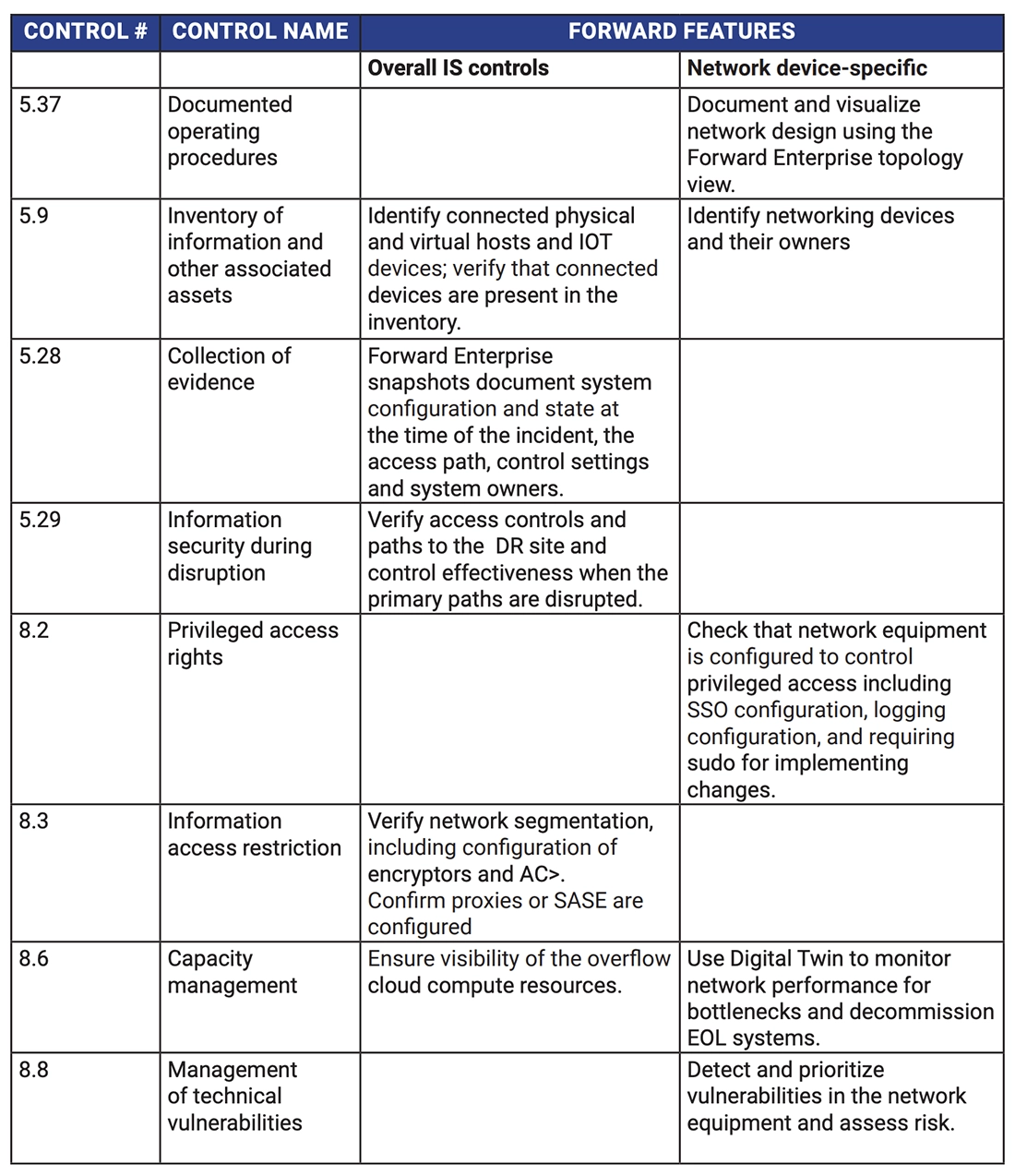
The first step toward ISO compliance is defining the scope of the Information System. This involves thoroughly assessing the current inventory of IT assets and documenting the procedures for deploying and decommissioning those assets. These requirements are outlined in controls 5.37 and 5.9 of the ISO framework. Traditional inventory tools, such as classic CMDBs, are often inaccurate and tend to overlook newly connected or “shadow IT” assets. If an auditor requests a sample of devices for verification and finds discrepancies in the existing inventory, it can trigger an exhaustive audit to verify the entire inventory. This not only prolongs the audit process and increases costs but also places a significantly greater burden on IT personnel compared to ensuring the inventory is accurate from the outset.
A digital twin offers near-real-time inventory validation, generates reports on all currently connected hosts and their associated switches, and helps identify and address “shadow IT” assets before an audit takes place.
This methodology is also highly effective for meeting the evidence-collection requirements outlined in paragraph 5.28 of the framework. Reports and snapshots from Forward Enterprise can be delivered directly to auditors, streamlining the audit process. Since snapshots capture the system’s state at a specific point in time, they are ideal for documenting the system’s condition and collecting evidence during a security incident. This approach eliminates the need for manually gathering logs from individual systems, saving significant time and effort in both audit preparation and incident response.
Forward Enterprise is invaluable for ensuring that information security is maintained during disruptions, as required by control 5.29. With the Forward Enterprise security posture matrix, both reachability and access controls for Disaster Recovery (DR) subnets can be quickly and visually verified. Without Forward Enterprise, this verification would involve reviewing numerous firewall configuration files for both production and DR zones, accompanied by a detailed write-up comparing access controls under normal and disaster scenarios—a far more time-consuming and complex process.
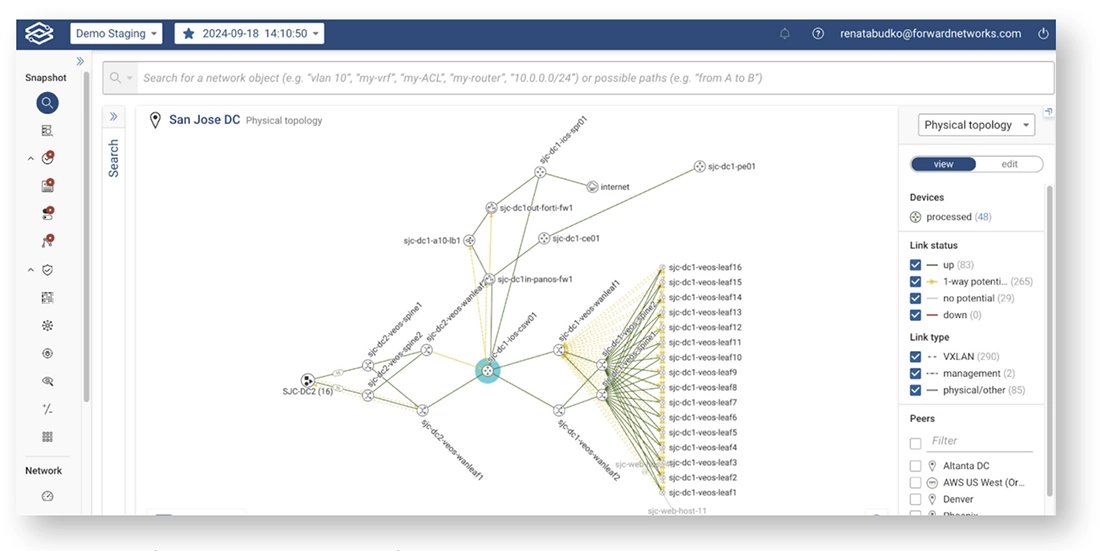
Last but not least, Forward Enterprise network topology eliminates the need to manually draw a Visio diagram of the network layout, which is required by control 5.37 to document operating procedures properly. (See Figure 1)

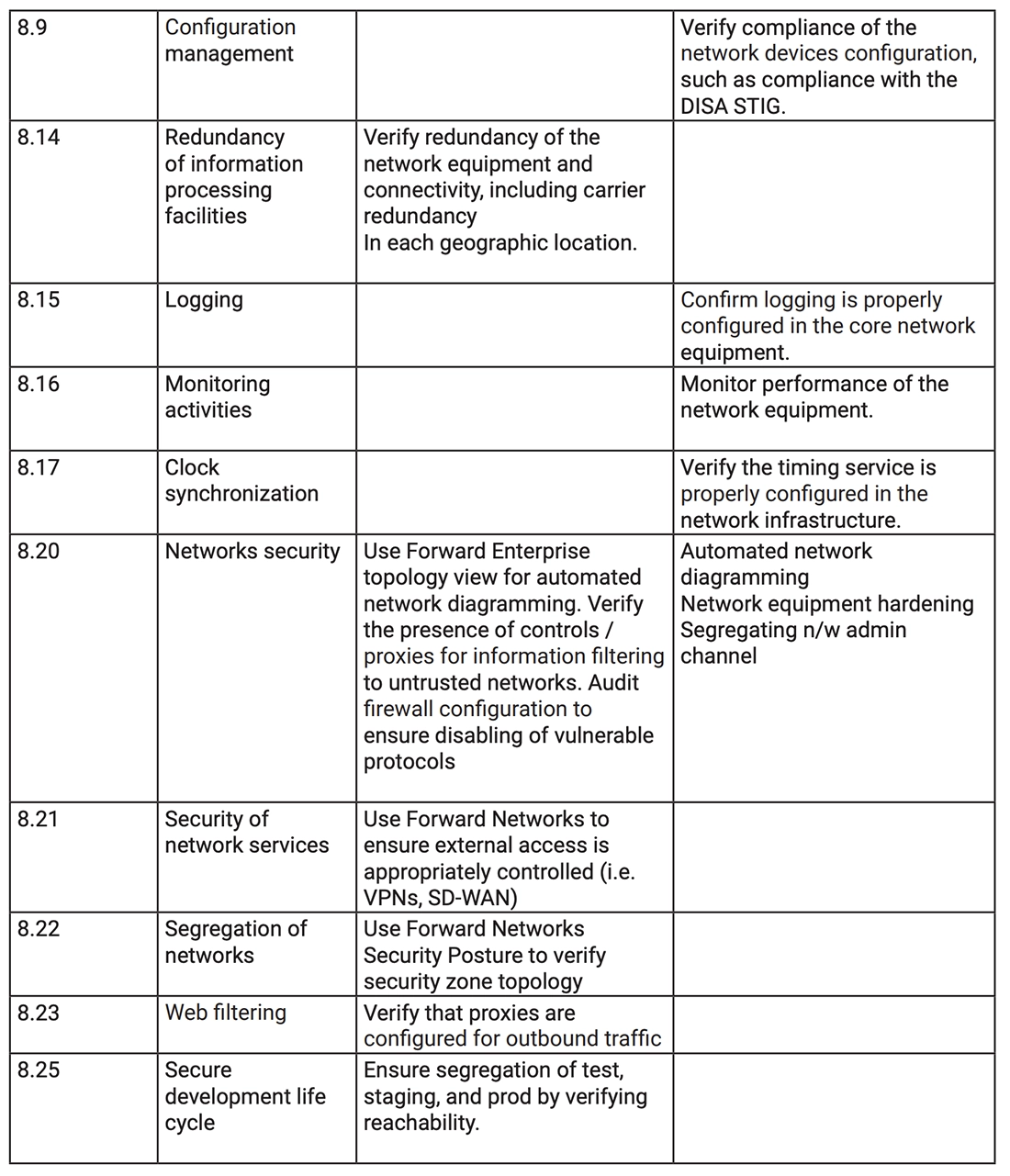
Forward Enterprise excels in managing and auditing the technical controls required by ISO 27001:2022 Section 8. This is particularly evident in the 17 controls directly related to network architecture and security, which ensure the protection of information within networks and their supporting information processing facilities. By implementing these controls, organizations can safeguard the confidentiality, integrity, and availability of their networkbased information assets—an essential requirement in today’s interconnected business landscape
This broad category includes Configuration Management (8.9), Change Management (8.32), and Capacity Management (8.6).
As a diverse, geographically distributed organization, it is extremely difficult to obtain evidence that meets these broad requirements. IT personnel supporting audit activities often lack a clear understanding of the network architecture implemented by other divisions or in different countries. Additionally, they typically do not have the necessary privileges to directly access and gather the required evidence. This leads to lengthy email chains and back-andforth voicemails, wasting the time of numerous individuals while still failing to produce reliable results efficiently.
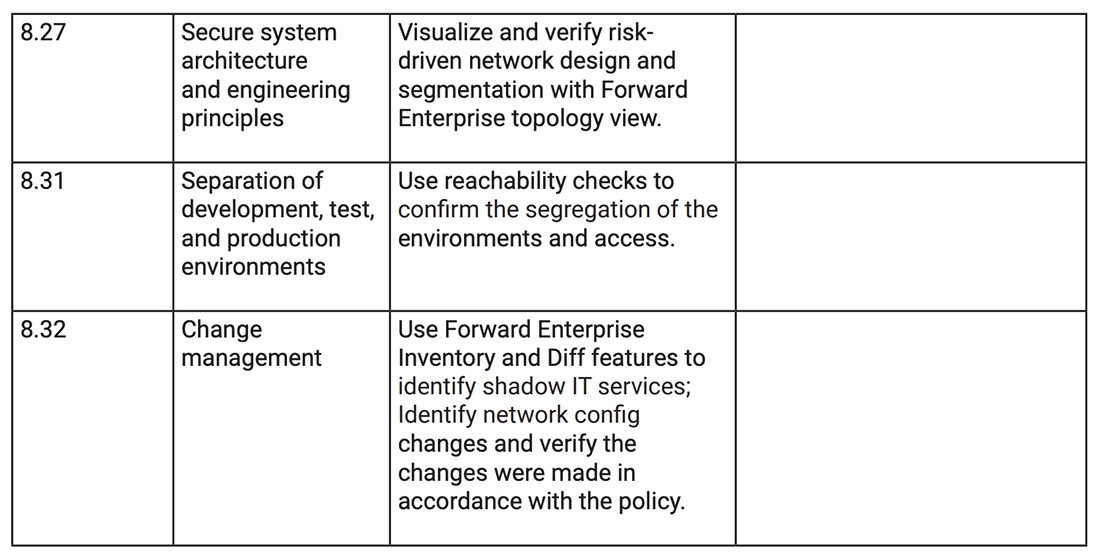
It is possible to visualize the entire network architecture using the digital twin. Both internal specialists and auditors can easily verify risk-driven network segmentation and design.
The Snapshot Diff functionality is essential for change management, enabling the identification of changes in both connected compute resources and network configurations. Additionally, Forward Enterprise simplifies the validation of network equipment and carrier connectivity redundancy for critical infrastructure segments (control 8.14) and the configuration of cloud resources for managing compute overflow (control 8.6). Forward Enterprise stands out as the only platform offering a unified, single-pane-of-glass visibility across on-premises and cloud infrastructure, even in multiple geographic locations.
This control is critical for enforcing security and minimizing the potential impact of exploits by ensuring the segregation of information services, users, and information systems within networks. The segregation and access control requirements are detailed in paragraphs 8.3, 8.20–8.25, and 8.31. Key tasks include: Segregating groups of information services, users, and systems, such as development, testing, staging, and production environments.
Implementing access controls, including ACLs, and configuring VPNs and SD-WANs for secure access outside the data center perimeter.
Managing less trusted zones, such as wireless networks, and more. Ensuring and demonstrating ongoing segregation across diverse technologies, DevOps organizations, business units, and geographies—especially as information systems evolve dynamically—presents significant challenges.
Forward Enterprise delivers reachability checks to prove segregation between any zones in the auditor sample. By providing at-a-glance ACL diffs, Forward Enterprise assists with on-going access control governance.
In highly regulated environments, Forward Enterprise models devices specifically designed for network segregation, such as encryptors and SD-WAN controllers. It provides a straightforward method to demonstrate segregation by leveraging configuration snapshots from these devices.
These controls are designed to ensure that networks and the information they transmit are protected against threats, unauthorized access, and potential breaches. They focus on comprehensive network management, well-defined policies and procedures, effective segregation, and secure information transfer practices. Forward Enterprise streamlines both the management of these controls and the process of gathering evidence to demonstrate compliance.
Network equipment forms the backbone of connected infrastructure, serving as the foundation for IT reliability and integrity. Its reliability is crucial to maintaining a secure and reliable system. Consequently, network equipment is subject to numerous ISO controls, including paragraphs 8.6, 8.8, 8.9, 8.15, and 8.16.
Implementing and managing controls related to network equipment poses significant challenges for security teams, requiring them to establish policies and processes that must be executed by numerous network operations teams across the enterprise. Key measures include:
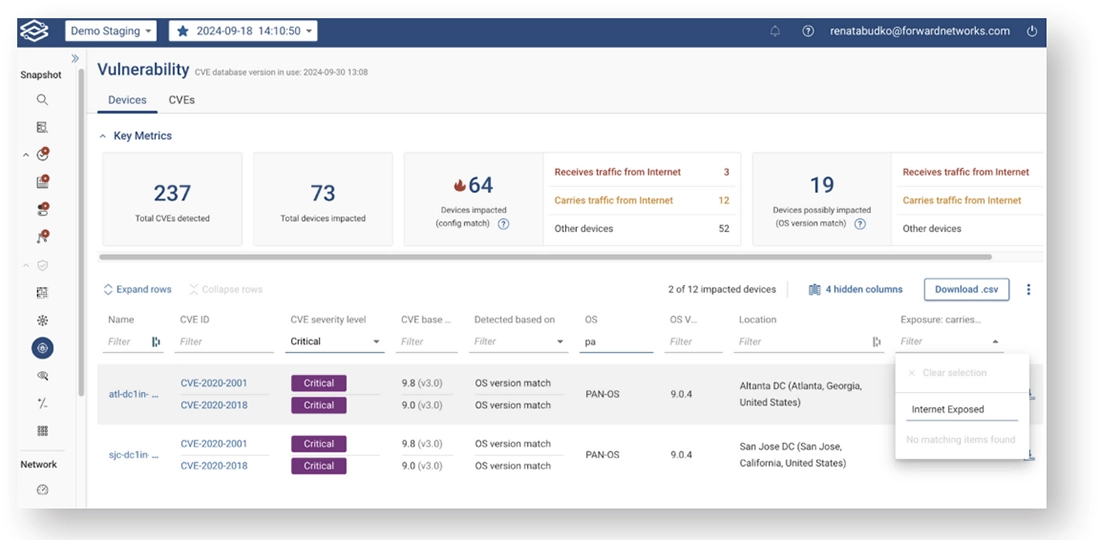
Forward Enterprise vulnerability management capabilities enable network operations teams to consistently verify the secure configuration of core devices and monitor equipment for impending End-of-Life status, reducing overall risk. Additionally, the platform enhances the management of technical vulnerabilities, as required by control 8.8, by uniquely prioritizing vulnerabilities that are specifically relevant to each device’s configuration—streamlining efforts and improving efficiency. (See Figure 2)

Other network equipment configuration parameters, such as logging and monitoring settings, NTP server configurations, proper authentication for management accounts, and more, can be easily verified in one centralized location using Forward Enterprise’s normalized configuration data. In regulated environments, equipment configurations can be assessed against established benchmarks, such as STIG or CIS, with the results clearly summarized in a detailed, tabulated report.
Information security is a critical concern in financial, manufacturing, healthcare, and retail industries. An ISO 27001 compliance certification can provide a competitive advantage.
In order to successfully pass an audit, organizations must maintain a robust network security posture and consistently gather evidence of satisfied controls that are required by ISO 27001’s comprehensive approach to information security.
Using the Forward Enterprise Network Digital Twin platform, half of all technological and organizational controls are managed, ensuring a successful compliance audit and helping the network security, risk management, and operations teams optimize their valuable time.
For organizations seeking to meet the deadlines set by IOS 27001:2022 and upgrade their security posture in accordance with the new controls, Forward Enterprise is the right platform to implement internal governance policies and collect the evidence auditors require.