Distributed Application and Worker Environments
Cloud-based Network Management Is the Preferred Deployment Approach
End-to-end Network Visibility Is A Requirement
End-to-end Network Management Is Highly Desired
Digital Twin Technology Awareness Is Expanding
Network Automation And Supporting AI/ML Technology Are Gaining Traction
Organizations are distributing applications across private data centers, multiple public clouds, and edge locations. Plus, hybrid work initiatives are enabling remote work from home or other locations outside of traditional office settings. As the result, the network has become critical to ensuring secure connectivity. These modern, distributed networks create greater challenges for organizations as they can create blind spots and become operationally complex to effectively manage. In addition, organizations are exploring the use of new technologies that drive visibility, efficiency, and automation.
To better understand how organizations are addressing end-to-end network visibility and management as well as adopting new technologies to drive greater operational efficiencies, ESG surveyed 339 IT professionals at organizations in North America (US and Canada) responsible for their organization’s network environment.
This study sought to:

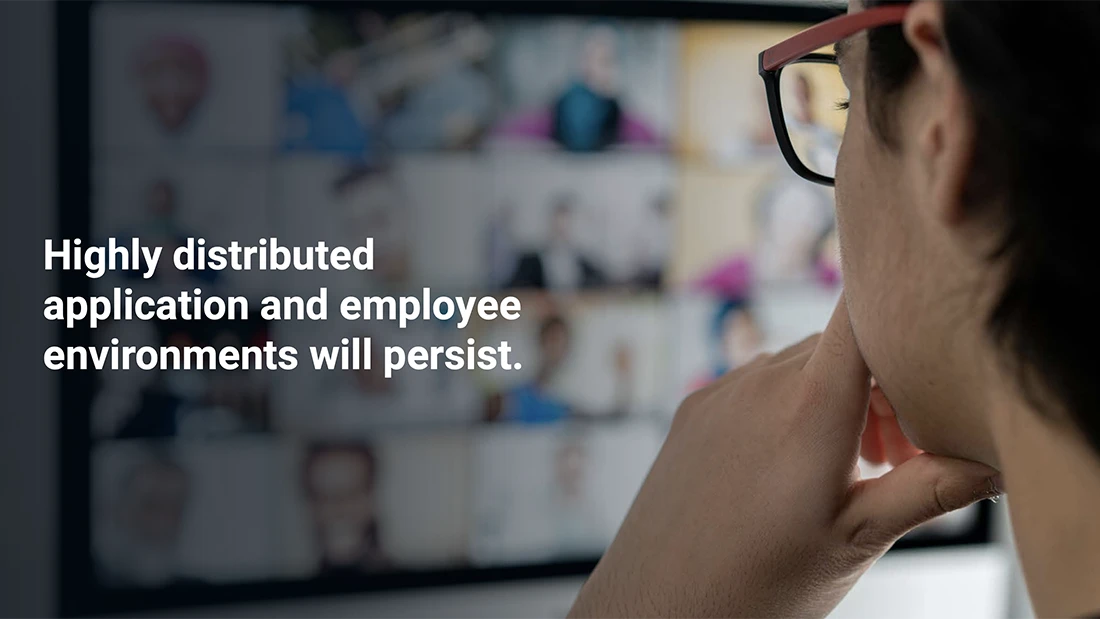
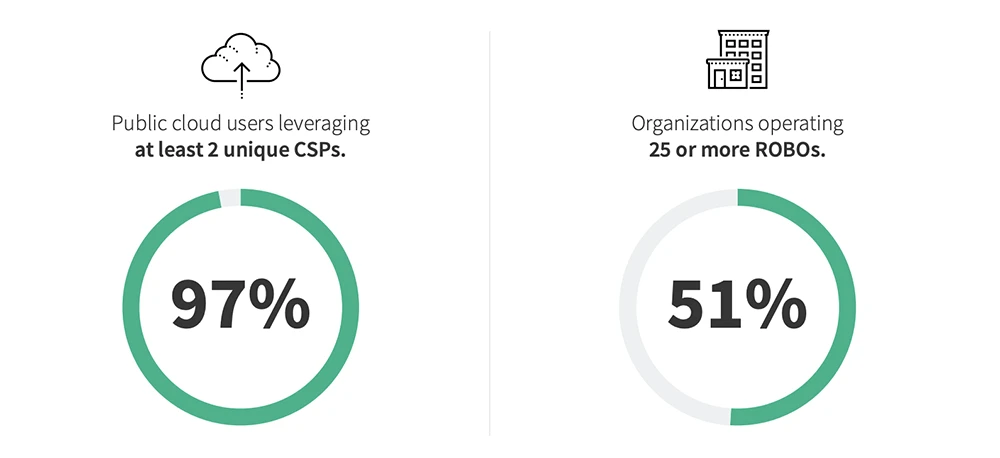
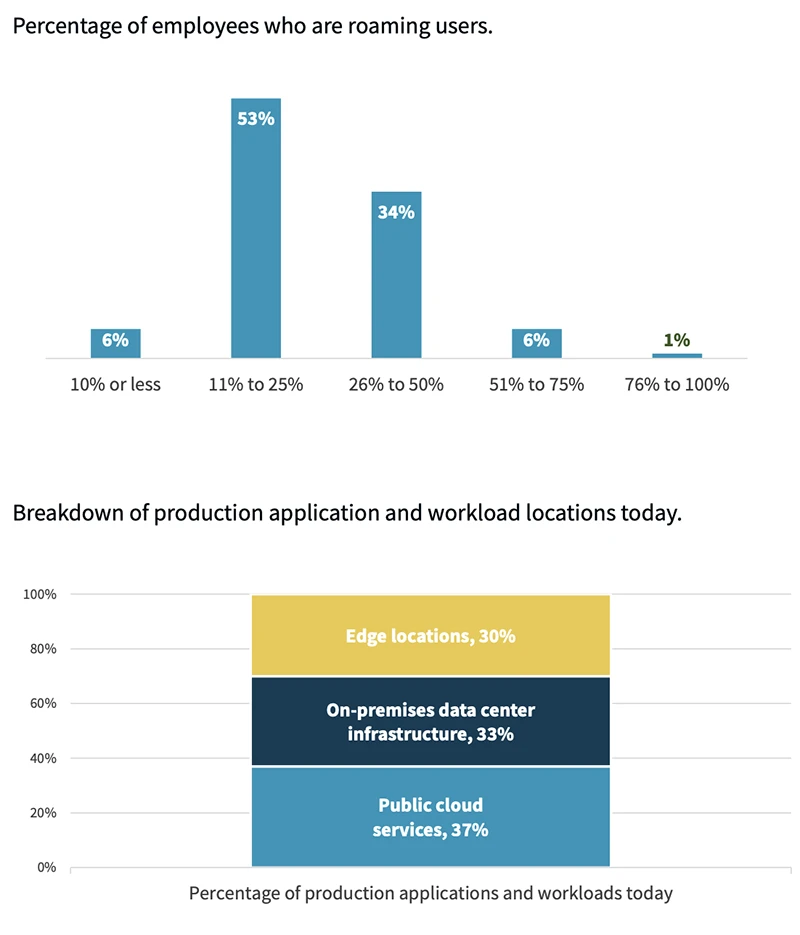
Between public cloud infrastructure services and increasingly hybrid work policies, highly distributed application environments have become the norm and not the exception. Public cloud usage continues to expand, with 97% of current users leveraging at least two unique public clouds, and more than a quarter using four or more. Additionally, edge environments are growing, with 51% of organizations operating at least 25 remote sites, and 41% reporting that more than a quarter of their employees are roaming users, meaning they work outside the confines of an office at least once a week.
As a result of these factors, applications are distributed across private data centers, public clouds, and edge locations almost evenly. Undoubtably, employees will continue to work remotely in the future. The network is the critical component in delivering positive experiences, so organizations need to improve operational efficiencies.
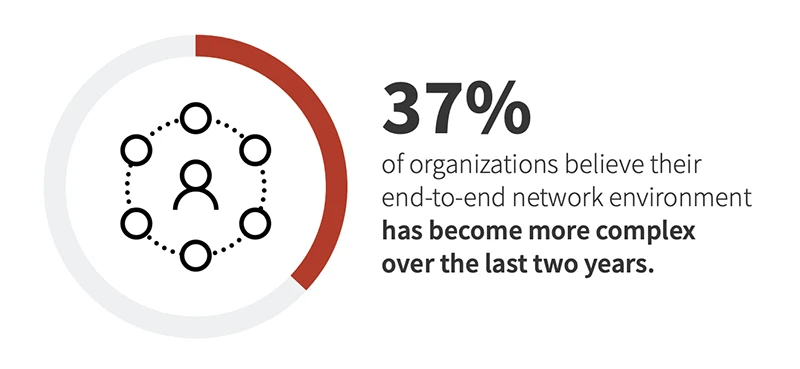
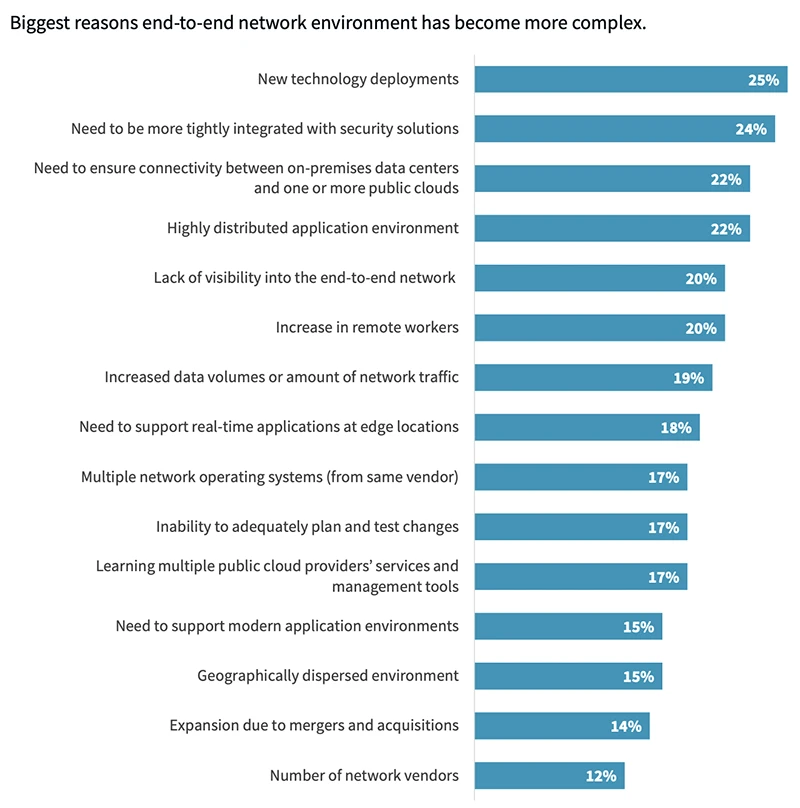
These distributed network environments can drive complexity. Indeed, more than a third of organizations believe their end-to-end network environment has become more complex over the past two years. When asked to identify factors behind this trend, a quarter of these organizations cited the need to deploy new technology. The other most commonly cited reasons included integration with security, ensuring connectivity between data centers and one or more public clouds, distributed application environments, a lack of visibility, and an increase in remote workers.
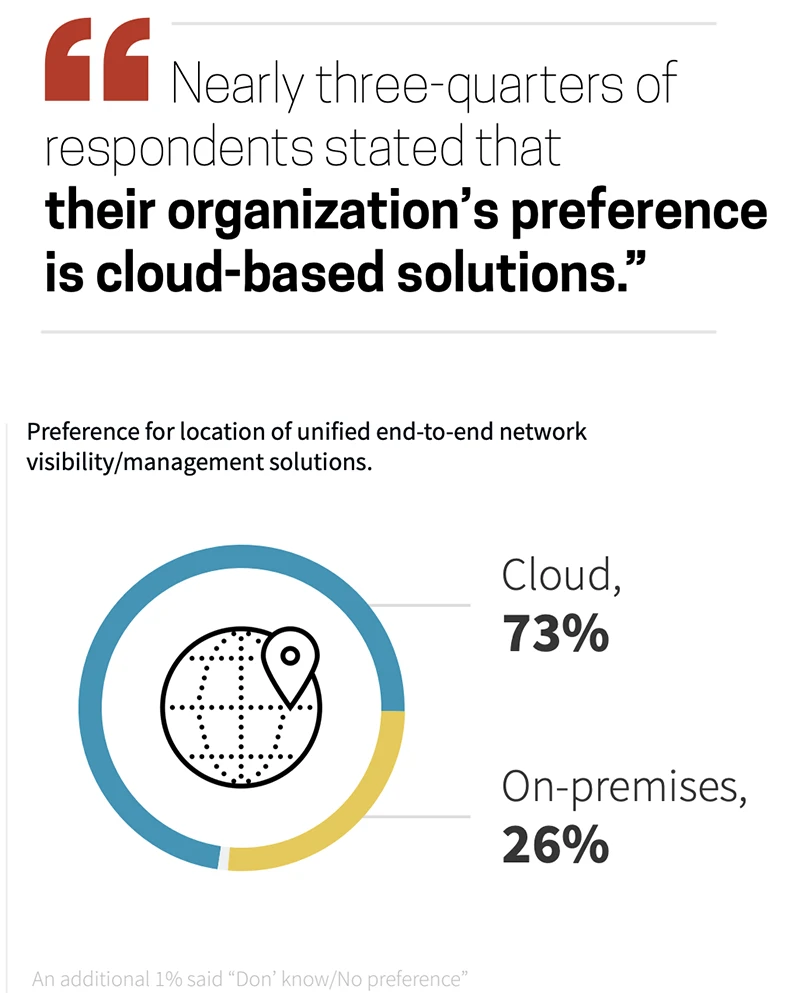
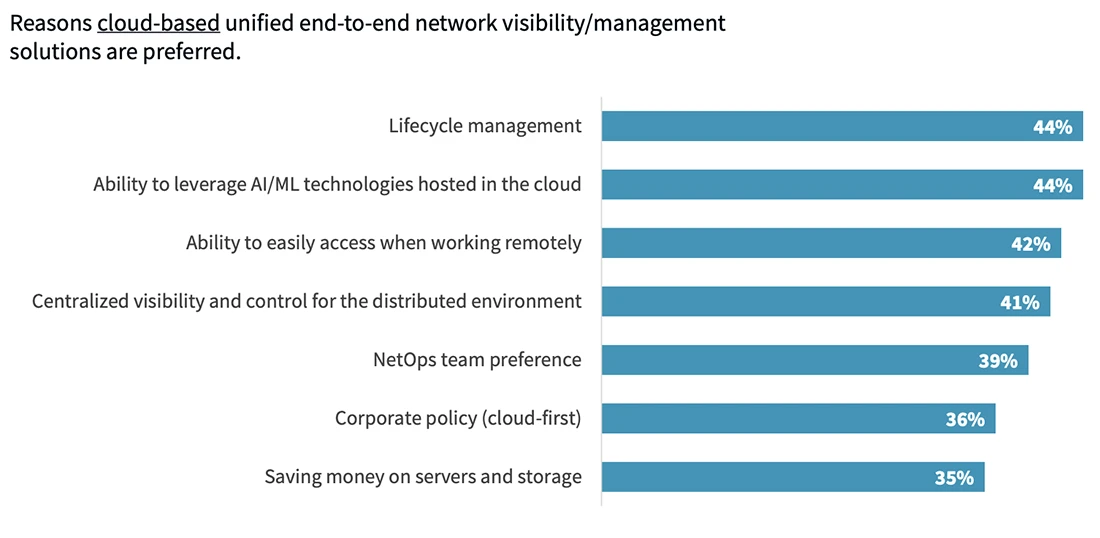
One of the big shifts in network management is the preference to have cloud-based network management solutions. Indeed, nearly three-quarters (73%) of respondents stated that their organization’s preference is cloud-based solutions. When asked about the influences behind this preference, 44% cited lifecycle management and/or the ability to leverage AI/ML technology. With a nod to remote workers (including those in IT operations), cloud-based solutions are easy to access when working remotely (42%), and for those distributed environments, it provides centralized visibility and control (41%).
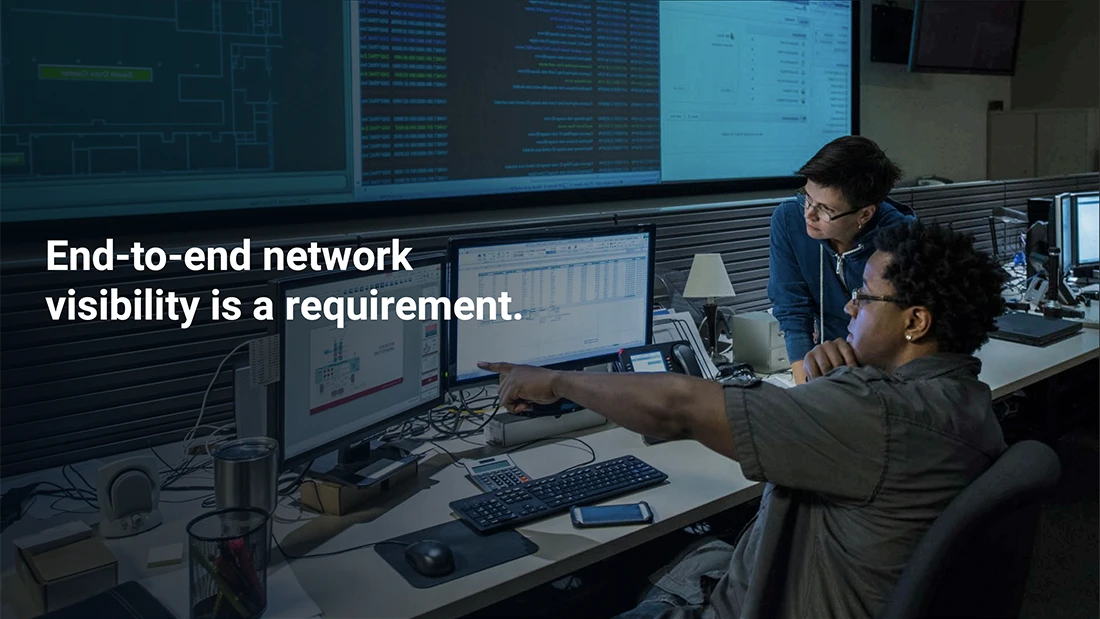
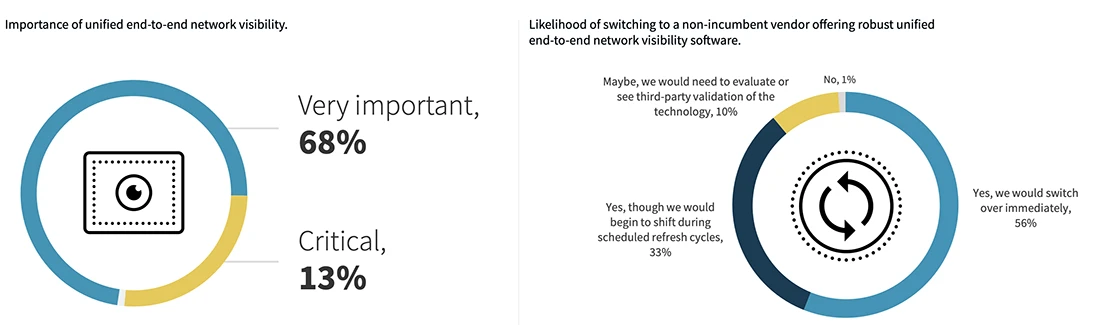
Virtually all respondents believe that it is important to have end-to-end network visibility, with two-thirds (68%) identifying it as very important and another 13% calling it critical. End-to-end visibility also plays an important role when considering and selecting new tools. In fact, more than half (56%) of the respondents who believe end-to-end network visibility is important stated they would switch over to a vendor that had that capability immediately, and another third said they would shift during a refresh cycle. This is a clear mandate for end-to-end visibility in modern network environments.
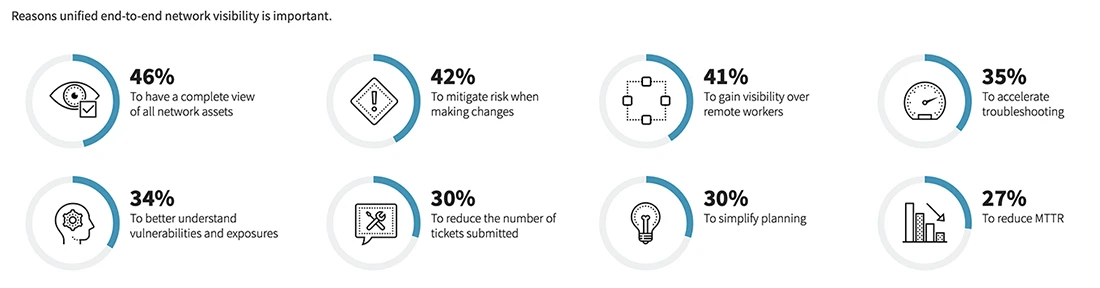
It is clear that end-to-end visibility is important, but why do organizations need it? The most common response was simply to get a complete view of all the network assets. In highly distributed environments, identifying all the devices and remote workers is critical. Other common reasons include the ability to mitigate risk when making changes (42%) and to gain visibility over remote workers (41%), with the latter being critical for organizations with hybrid work initiatives.
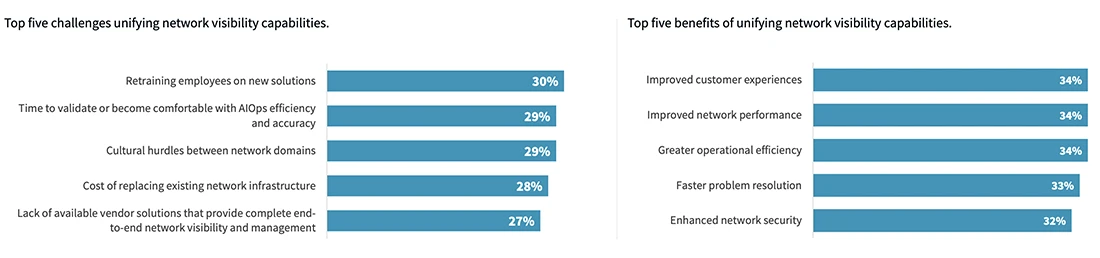
Implementing end-to-end visibility isn’t without its challenges as organizations cite having to retrain employees on new solutions (30%) and the time to validate or become comfortable with AIOps (29%) as issues. Another common challenge is overcoming the cultural hurdles between network domains (29%). And it is worth noting that 27% report a lack of available vendors with a complete solution.
On the plus side, organizations reported numerous benefits to extending visibility, with a three-way tie for the top spot. More than a third cited improved customer experiences, improved network performance, and/or greater operational efficiencies. Closely behind those, organizations recognized faster problem resolution (33%) and enhanced network security (32%).
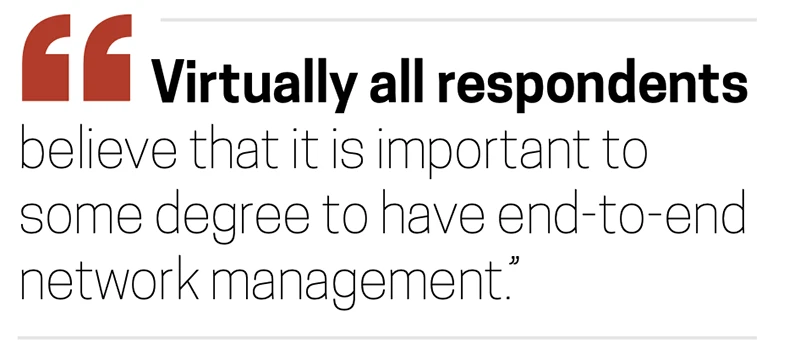
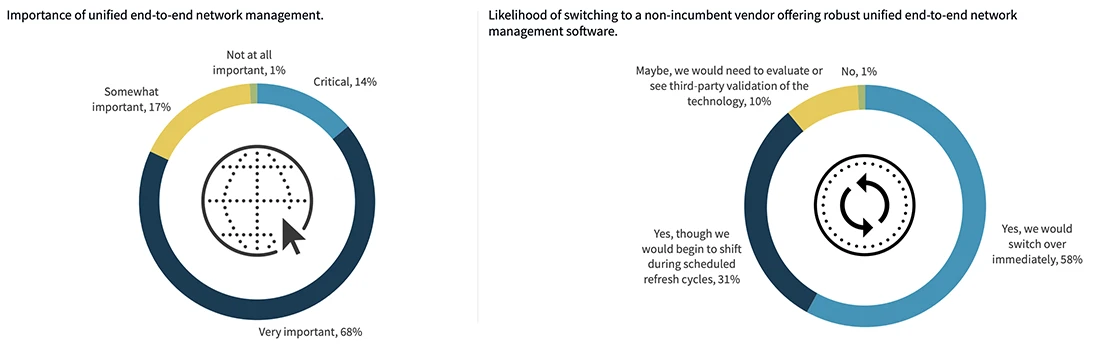
As was the case with network visibility, virtually all respondents believe that it is important to some degree to have end-to-end network management, with more than three-quarters stating it is either very important (68%) or critical (14%). End-to-end management also plays an important role when selecting new tools. More than half (58%) of respondents stated their organization would switch over to a vendor that had that capability immediately. Just less than a third (31%) said they would be more likely to shift during a refresh cycle.
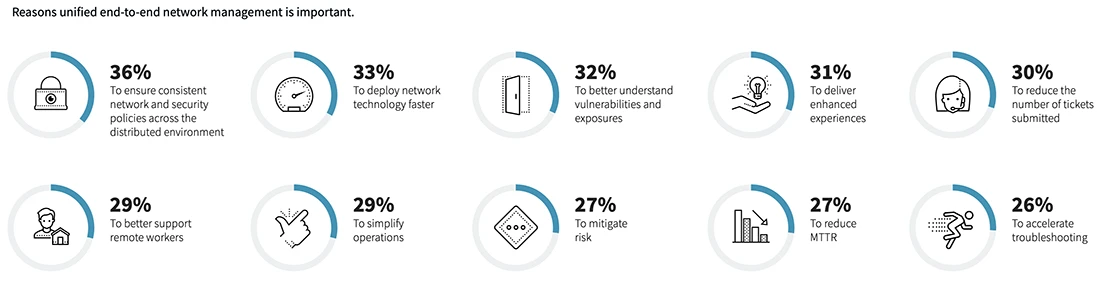
Why is end-to-end network management so important? More than a third (36%) of respondents cited consistent network and security policies across a distributed environment. This makes sense as having centralized control with distributed enforcement is consistently a top priority for network operations teams. Organizations also want to deploy network technologies faster (33%) and better understand vulnerabilities and exposures (32%), which is especially important with the increased attack surface of a distributed environment. Other common reasons for unified network management include the abilities to deliver enhanced experiences (31%), reduce tickets (30%), and better support remote workers (29%).
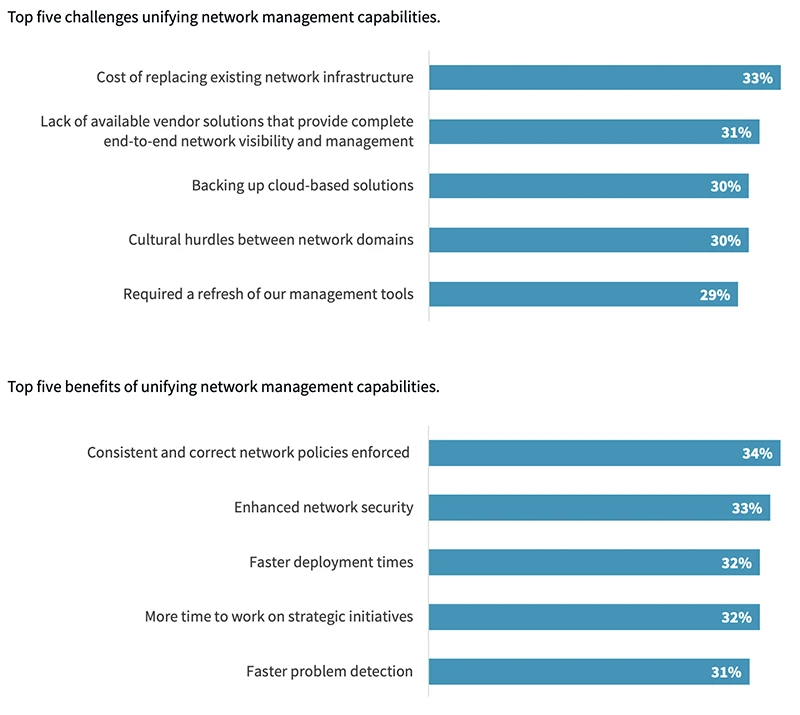
Organizations also reported a number of challenges when implementing end-to-end management, including the cost to replace the existing network infrastructure (33%), the lack of available solutions (31%), and backing up cloud-based solutions (30%). The last one is an often-cited challenge as vendors move management solutions to the cloud to provide end-to-end solutions. It is also worth noting the cultural issues between network domains when it comes to unifying management capabilities.
At the other end of the spectrum, organizations report end-to-end management solutions have enabled them to enforce consistent and correct network policies (34%), deliver enhanced network security (33%), and speed deployment times (32%). Also, the efficiencies of having end-to-end management capabilities gives network teams more time to work on strategic initiatives.
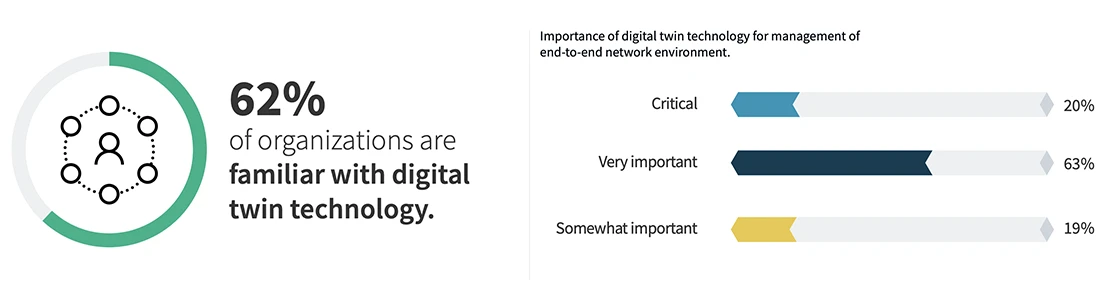
One of the more innovative technologies gaining awareness and traction in the networking market today is known as digital twin. Basically, it creates a digital representation of the physical network environment. Think of it as a living and breathing network visio diagram that organizations can use to see how a planned change will impact an existing environment or quickly identify what network devices need to be upgraded with the latest patch or capability. Some vendors are even using it to train teams on the network without impacting it and to proactively plan new deployments while waiting for supply chain backlogs to smooth out. The promising part is that almost two-thirds of respondents (62%) are now familiar with digital twin technology as its use cases and benefits are brought to light. The technology’s real and perceived importance for managing the network environment is also growing. In fact, for those respondents who are already aware of the technology, the majority believe it is either very important (63%) or even critical (20%) to managing an end-to-end network environment. Organizations not yet familiar with digital twin technology would be well served by investigating how it can help them with their network environment.
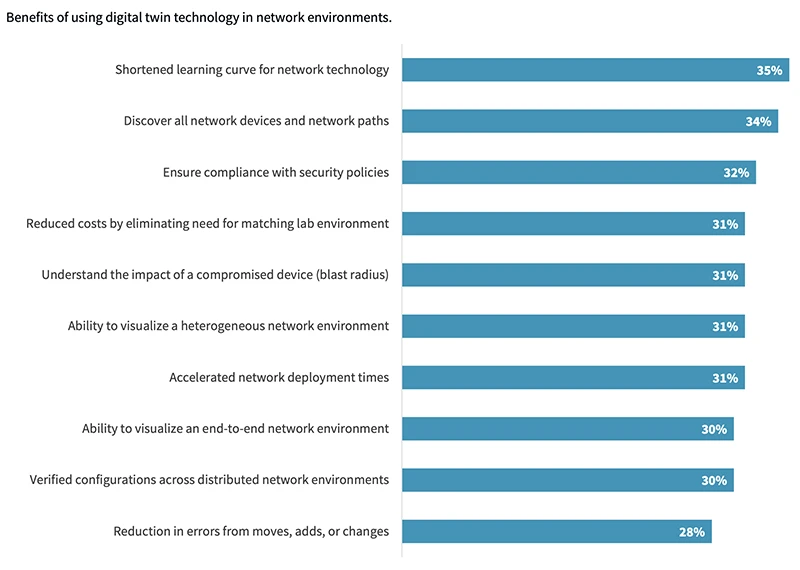
Organizations aware of digital twin technology have realized, or expect, a number of benefits. These include the ability to shorten the learning curve for network technology (35%), the ability to discover all network devices and paths (34%), and ensuring compliance with security policies (32%). Organizations also report that reducing costs by eliminating the need for a matching lab environment would be beneficial, along with being able to understand the impact of a compromised device, visualizing a heterogeneous network environment, and accelerating network deployment times. Clearly, having a digital twin of the network environment can deliver a number of benefits to its users.
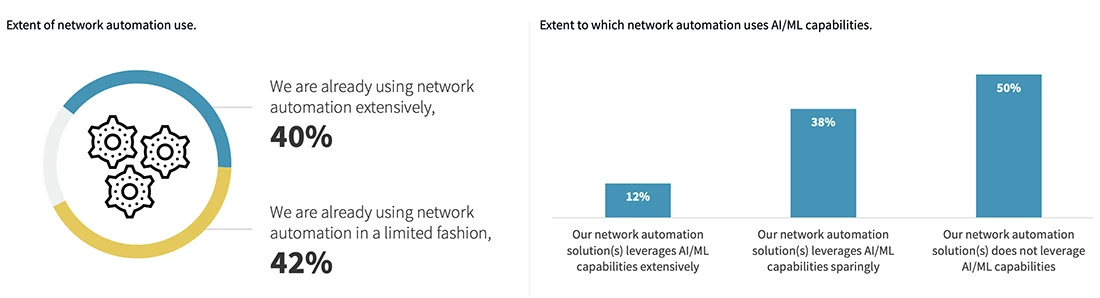
Given the complexity associated with distributed network environments, network operations teams are turning to network automation tools to minimize the amount of manual repetitive tasks. More than eight in ten report leveraging network automation in some capacity, with 40% of respondents describing the usage as extensive, and 42% leveraging it in a more limited fashion. While many associate network automation with AI/ML technologies, that is not always the case. In fact, only 12% of respondents indicate their network automation solutions utilize AI/ML technologies extensively, while 38% report using it sparingly. Half of the organizations reported not using AI/ML in their network automation solution at all.
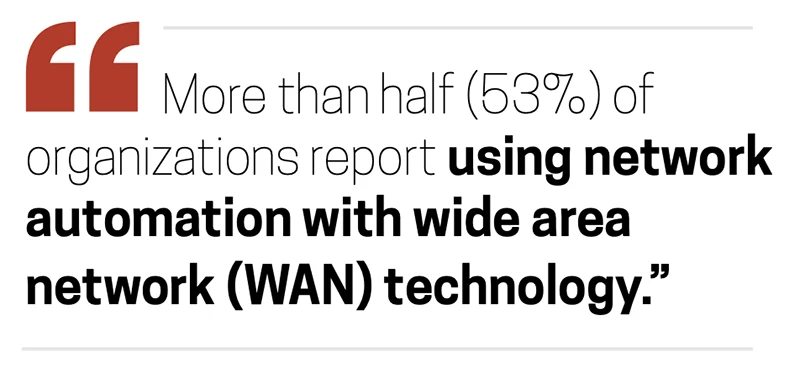
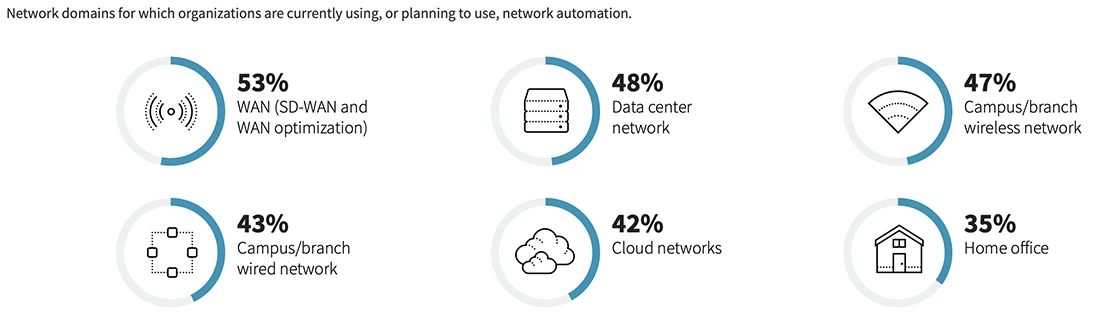
Given the widespread use of network automation, it makes sense to examine the network domains organizations most commonly apply it to. More than half (53%) of organizations report using network automation with wide area network (WAN) technology, and given the distributed nature of these environments, this shouldn’t be a surprise. And despite all the hype about cloud computing, data center networks are next in line to use network automation (48%), followed closely by campus and branch wireless networks (47%).
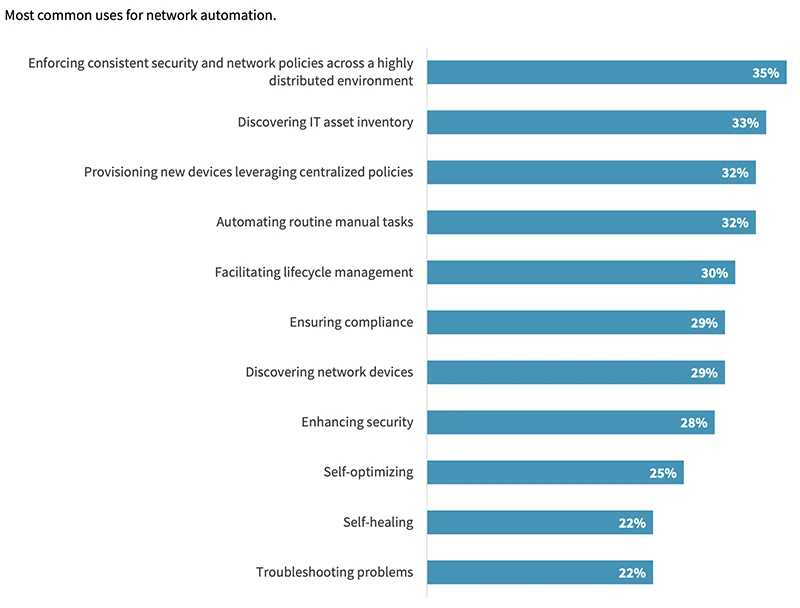
Knowing where automation is used, it also makes sense to investigate why it is used. While topics like self-optimized and self-healing networks get the lion’s share of the attention, most organizations find value first in other use cases. The most common response involves using automation to enforce consistent security and network policies across a highly distributed environment (35%). Following that is the ability to automate IT asset discovery (33%) and provisioning new devices with centralized policies (32%). Other use cases include automating routine manual tasks (34%) and facilitating lifecycle management (30%) or compliance (29%). Not surprisingly, given their more advanced nature, the aforementioned selfoptimizing and self-healing use cases were at the bottom of the list.