Free report

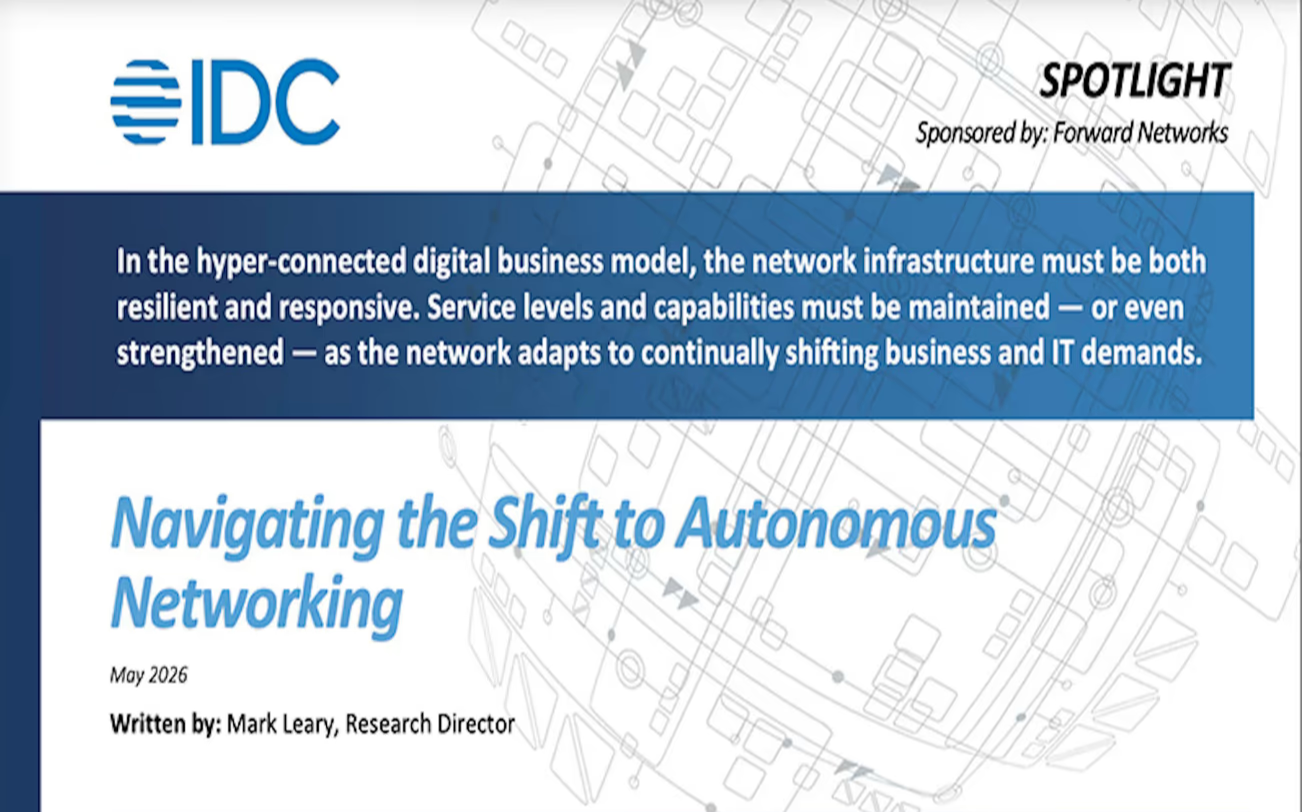
Navigating the Shift to Autonomous Networking: A New IDC Report

IDC Spotlight report May 2026
Mark Leary, Research Director

Network complexity is quietly stalling AI initiatives. New IDC research finds that network security concerns, automation gaps, and staffing shortfalls are the top network-related reasons AI projects get delayed or abandoned, with nearly a third of enterprises citing network security alone. This new IDC report, Navigating the Shift to Autonomous Networking, examines why manual network management can no longer keep pace with digital business and AI-driven demand, and lays out what's actually required to build a trustworthy autonomous network.

At the center of that shift is the network digital twin: a complete, mathematically precise behavioral model of a network's configuration, state, and security posture across every vendor, domain, and cloud. IDC identifies four requirements every autonomous networking strategy must meet and explains why a digital twin foundation is what makes safe automation possible in the first place. The report also quantifies the payoff: organizations with strong network visibility and change validation report up to 89% less unplanned downtime, 44% faster mean time to resolution, and 71% faster service deployments.

The report also looks at how Forward Networks operationalizes these principles in production, multi-vendor and multi-cloud networks. Forward Enterprise builds the digital twin itself; Forward Predict validates network and security changes against that twin before they ever touch production; and Forward AI provides a natural-language, evidence-backed interface to the twin for engineers, operators, and autonomous agents alike.

Download the full IDC report to learn:

  • The four requirements for trustworthy autonomous networking, and where most organizations fall short today
  • Why network digital twins are the structural foundation for safe network automation IDC's top five network management tasks enterprises are prioritizing for automation in 2026
  • How Forward Enterprise, Forward Predict, and Forward AI put these principles into practice

Fill out the form to get instant access.

industry recognition

Awards

Mobile Breakthrough Award 2023
Global Infosec Awards Winner Cyber Defense Magazine 2024
Saas Award

Related FAQs

A network digital twin is a digital model of the network that makes network data accessible and actionable to ensure the network behaves as expected and is secure.
Network management in which AI-driven systems gather intelligence, generate insights, and take or recommend management actions with minimal manual intervention.
Autonomous networking is only trustworthy if changes can be proven safe before they touch the production network. That requires a deterministic, end-to-end model of the entire network, every device, vendor, and cloud, built from real configuration and state data rather than assumptions. Forward Networks provides that validation layer.
Network automation covers scripted or tool-driven execution of specific tasks. Autonomous networking goes further: AI-driven systems continuously gather network intelligence, generate insights, and determine or execute the right management action with minimal human intervention.
IDC research finds network security concerns are the single largest network-related driver of AI project delays or abandonment, ahead of automation gaps, staffing shortfalls, and cloud connectivity limitations
Yes, when changes are validated against a digital twin before deployment. Testing proposed changes against a full behavioral model of the network, rather than applying them directly to production, is what makes autonomous network changes safe rather than risky.
Digital twins are currently deployed in commercial organizations with mission-critical networks, such as financial services, healthcare, and entertainment, as well as federal ones in the military, intelligence, and civilian spaces, where network security is a matter of national security.
Top cross